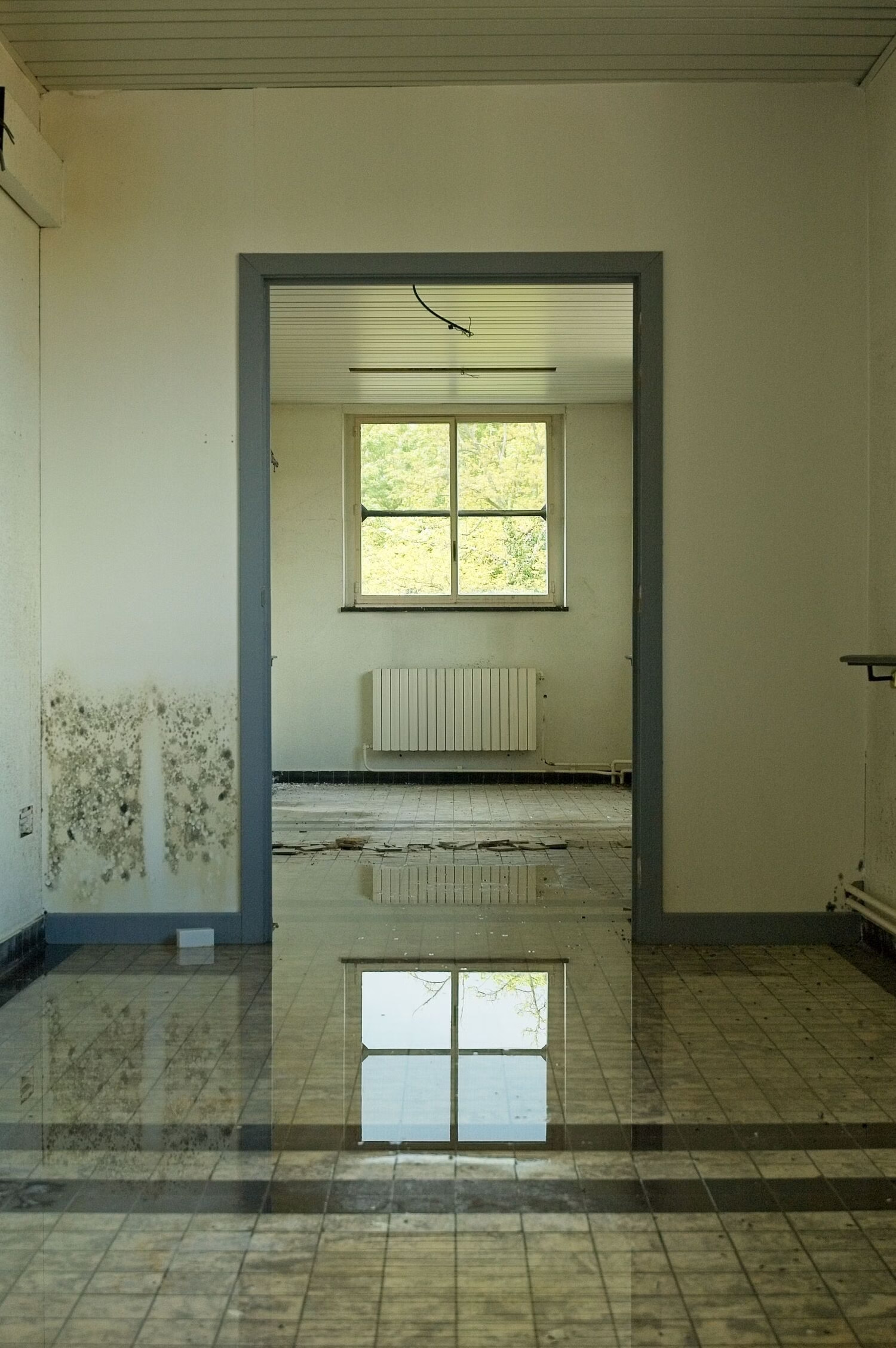

Water does not wait for business hours. A supply line lets go behind a Prune Hill kitchen, a washing machine hose splits while the family is at the coast, an atmospheric river overwhelms a downtown Camas gutter line at two in the morning — and the clock starts immediately. What you do in the first day decides whether this is a cleanup or a reconstruction.
This guide walks through the first 24 hours of a water emergency: what to do right now, what to leave alone, and what actually drives the cost of the repair. It is written for homeowners who need Water Damage Restoration in Camas, WA today, not next week.
If water is spreading through your home as you read this, call (360) 975-7274. SUREBUILD answers 24 hours a day and serves Camas directly.

The First 15 Minutes: Stop the Water and Kill the Power
Every minute of active flow adds material you will have to remove later. Before you photograph anything, before you call anyone, do these two things:
- Shut off the water. For a burst supply line or failed appliance, the fixture’s local stop valve is fastest. If that fails or the source is not obvious, use the main shutoff — in most Camas homes it is in the crawl space, the garage, or a meter box near the street. If you cannot find or turn it, contact City of Camas Public Works to have the meter shut at the street.
- Cut power to the affected area. If water has reached outlets, baseboards, or anywhere near your panel, shut those circuits off at the breaker. Do not walk into standing water to reach a panel. If the panel itself is wet, stop and call an electrician or the fire department.
Find your main shutoff now, before you need it. Hunting for a valve while water is running is how a contained leak becomes a whole-floor loss.
Why the First 24 Hours Decide the Cost
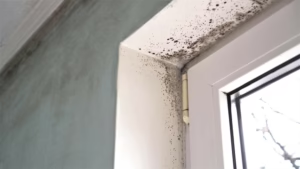
Mold begins colonizing damp organic material within roughly 24 to 48 hours. Drywall, framing, insulation, cabinet bases, and subfloor all qualify. This is the single reason emergency response time matters: a home dried aggressively on day one is usually a cleanup, while the same home left three days is a demolition and rebuild.
The Pacific Northwest makes it worse. From October through March our humidity stays high enough that a wet structure will not dry on its own, no matter how many windows you open. Materials that would air-dry elsewhere simply sit wet here and grow mold.
Water also moves in ways you cannot see. It travels along framing, wicks upward into drywall, runs beneath vinyl and laminate, and collects in the crawl spaces common throughout Camas. A floor that feels dry underfoot can sit above a saturated joist bay. We cover the warning signs in our guide to hidden water damage.
Not All Water Is the Same
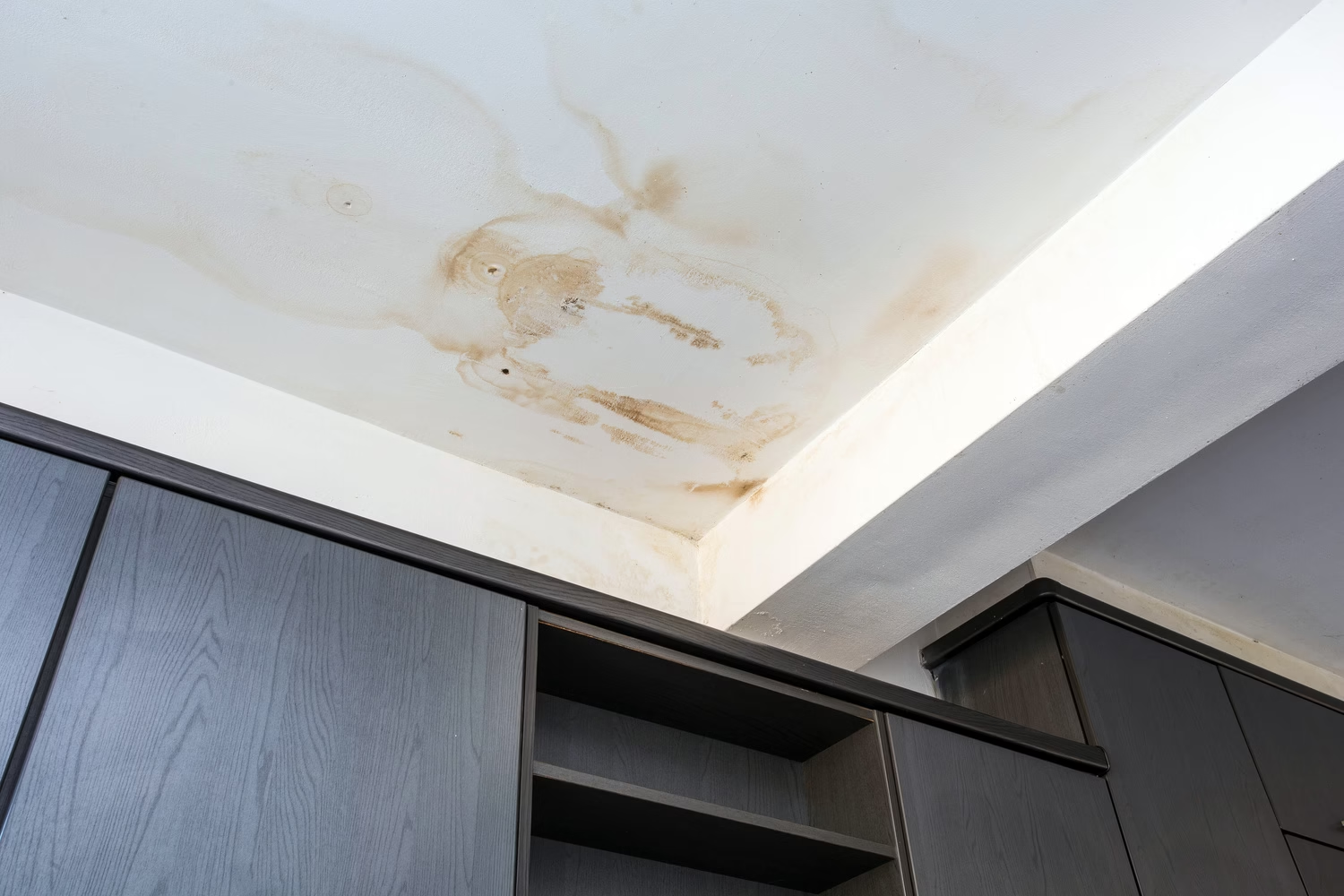
Restoration professionals work to the IICRC S500 standard, which sorts water into three categories. The category decides what can be dried and saved versus what has to be removed — and it changes as time passes.
- Category 1 — clean water. From a supply line, water heater, or overflowing tub. Most materials are salvageable if drying starts quickly.
- Category 2 — grey water. Dishwasher or washing machine discharge, or toilet overflow without solids. Contains contaminants; some porous materials come out.
- Category 3 — black water. Sewage backup, groundwater intrusion, or any water that has sat long enough to grow bacteria. Porous materials are removed, not dried.
This is why waiting is expensive rather than merely risky. Clean water degrades to Category 2 in roughly 48 hours, and Category 2 to Category 3 after that. A clean supply-line break addressed on day one may need no demolition at all. The same break found on day four is a Category 3 loss, with cabinets, flooring, and drywall coming out.
What to Do While You Wait for the Crew
Once the water is off and the power is safe, use the time productively:
- Photograph everything before you move it. Wide shots of each room, then close-ups of damaged materials and contents. Your insurer wants to see the loss in place. This is the step homeowners skip most often and regret later.
- Move what you can lift. Get contents, rugs, and electronics out of the wet zone and onto a dry floor.
- Lift furniture off wet carpet. Foil or wood blocks under the legs stop finishes bleeding into the fibres.
- Remove standing water if it is safe. A wet vac or mop helps with Category 1. Do not touch water you suspect is Category 3.
- Do not run your HVAC system. If water reached ducting or return vents, running the system pushes moisture and spores through the whole house.
- Do not throw damaged materials away. Your adjuster may need to inspect them. Bag them and set them aside instead.
Older Camas Homes Have Their Own Failure Points
Camas grew up around the paper mill, and the housing stock reflects that history. Homes in and around the historic downtown are often a century old, and they fail differently than the newer construction up on the hill.
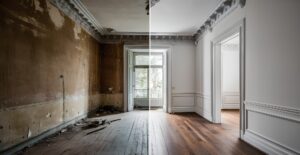
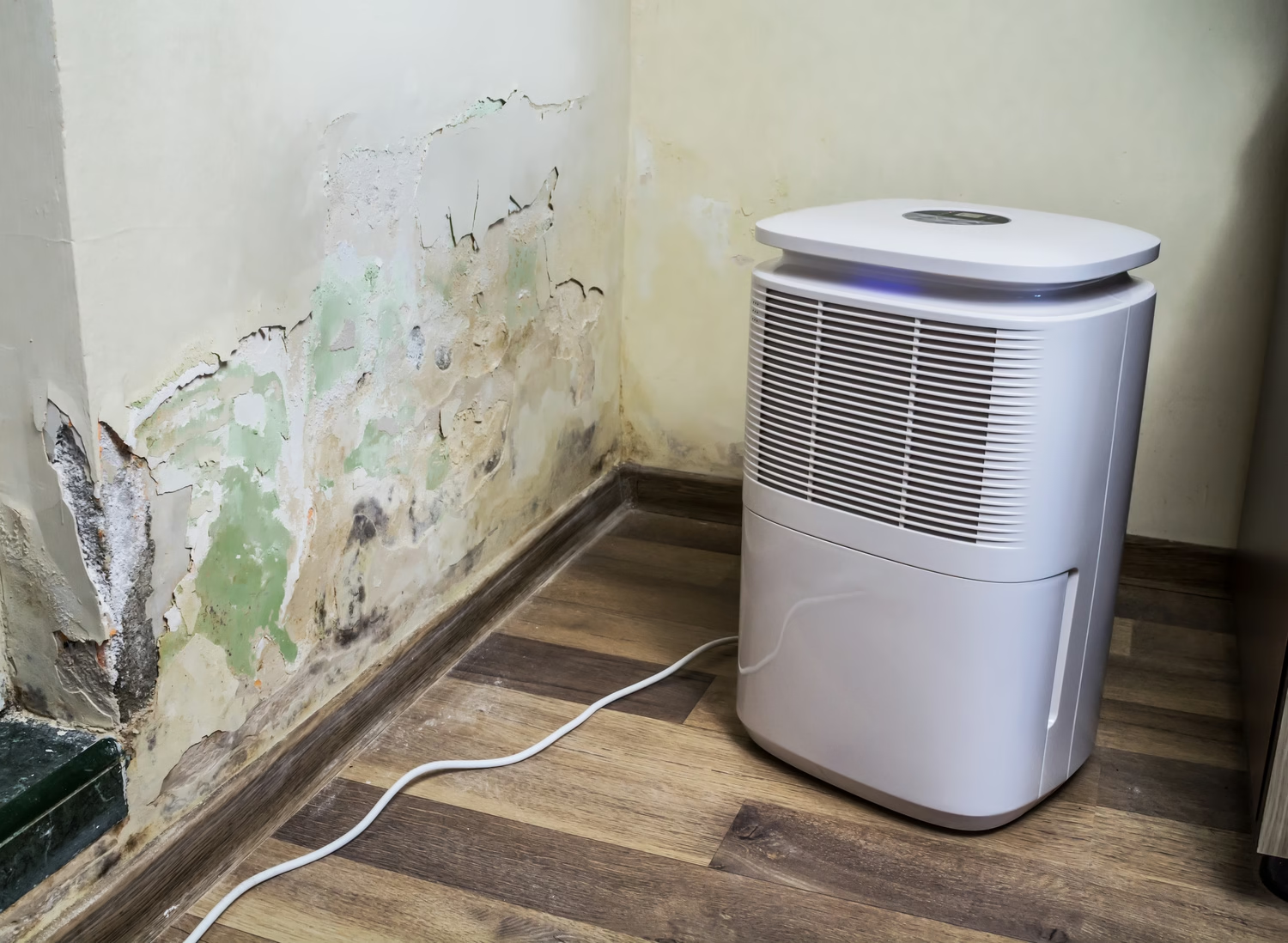
In older Camas houses we regularly find galvanized supply lines thinning from the inside until they split without warning, cast iron drain lines rusted through below the slab, and unconditioned crawl spaces where a slow leak feeds mold for months before anyone notices a smell. Original wood floors and lath-and-plaster walls also need slower, more careful drying than modern drywall — pushed too hard, they cup and crack.
Newer homes are not exempt. They simply fail at different points: appliance supply lines, upstairs laundry rooms above finished ceilings, and water heaters in conditioned space where a tank failure lands directly on finished flooring.
What Your Insurance Will and Will Not Cover
The distinction most Washington policies draw is sudden and accidental versus gradual. A supply line that bursts today is typically covered. A drip that has been rotting a cabinet base for a year typically is not, on the grounds that it counts as maintenance.
Two things protect you. First, act immediately — most policies contain a duty to mitigate, meaning damage that worsened because you delayed can be denied. Second, document everything from the first hour. We walk through the specifics in does homeowners insurance cover water damage.
One point worth knowing before you call anyone: you choose your restoration contractor, not your insurer. Your carrier may recommend a preferred vendor, but the decision is yours as the property owner.
How Long Water Damage Restoration in Camas Takes
Homeowners usually expect this to move faster than it does. A realistic sequence for emergency water restoration in Camas on a moderate loss:
- Hours 0–2: Emergency response and water mitigation — source control and extraction of standing water.
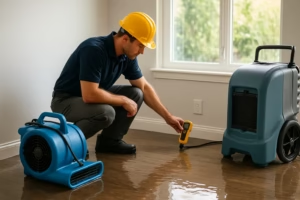
- Hours 2–6: Moisture mapping with meters and thermal imaging, removal of unsalvageable material, drying equipment set.
- Days 1–4: Structural drying with air movers and dehumidifiers, monitored daily against moisture readings.
- Days 3–5: Clearance readings confirm materials are back to dry standard.
- Week 2 onward: Reconstruction — drywall, flooring, cabinetry, and paint.
Drying finishes when the moisture meter says so, not when the calendar does. Equipment pulled early is the most common reason mold appears in a wall that was supposedly repaired. Our complete restoration timeline breaks down every phase.
Why Local Water Damage Repair in Camas Beats a Portland Dispatch
Response time is the whole game in water damage, and it is a geography problem. A crew dispatched from deep in Portland has to cross the river and fight I-5 or the 205 bridge to reach you. Minutes become hours, and hours are what separate drying a wall from replacing it.
SUREBUILD works throughout Camas, Washougal, Vancouver, and the wider Clark County area, and we are licensed in both states — WA# SUREBL*802QC and OR CCB# 244084. That matters more than it sounds: many Portland-based companies are not licensed to perform work in Washington.
You can see the full scope of our disaster restoration services in Camas, or read more about fire and water restoration in Camas, WA. We also provide water damage restoration in Vancouver and across the metro area.
When You Need Mold Remediation in Camas Instead
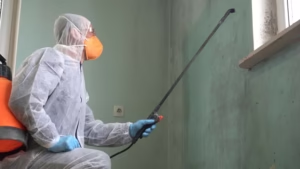
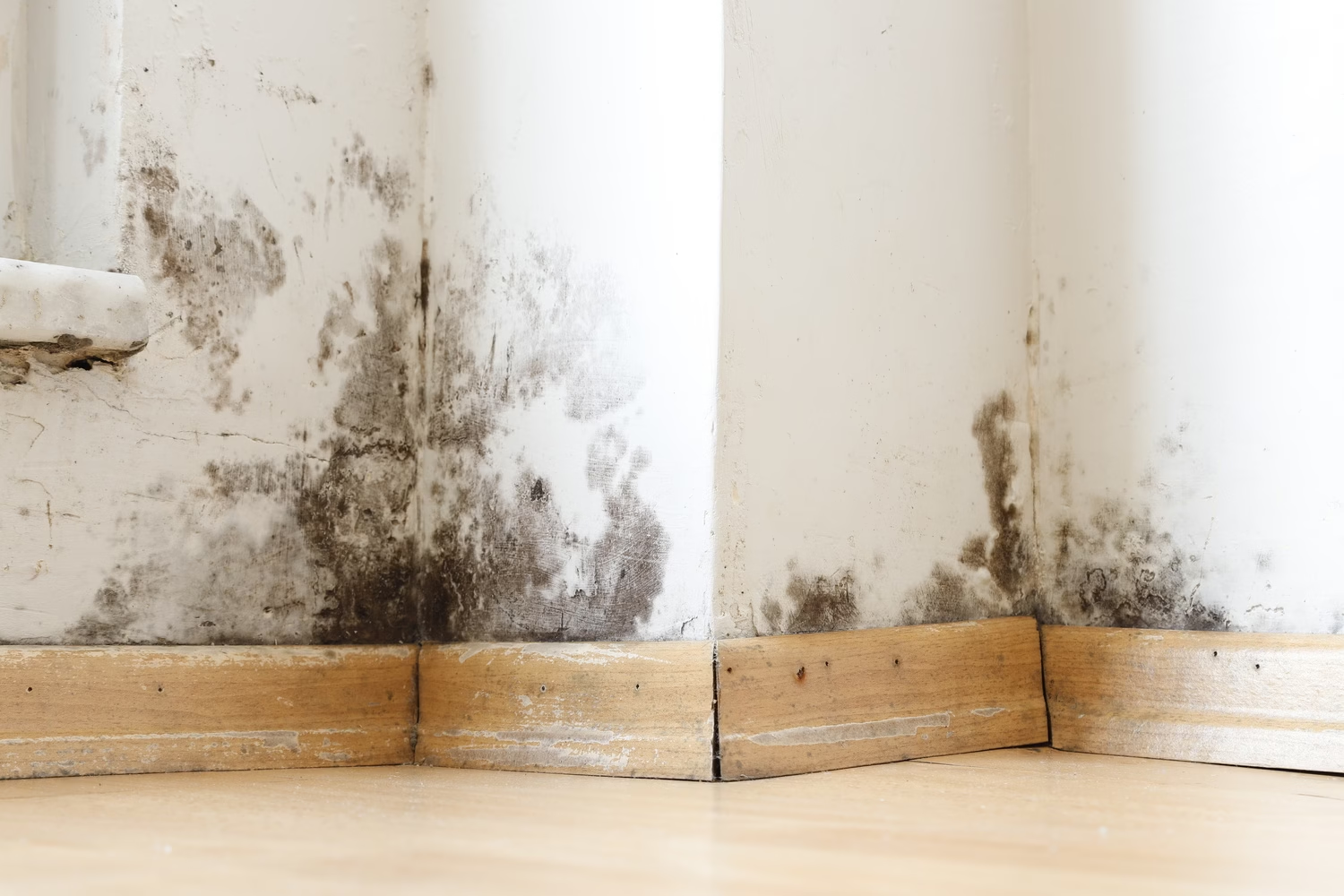
If the water sat for several days before anyone found it — a vacation leak, a crawl space failure, a slow drip behind a wall — you are no longer dealing with drying alone. Visible growth, a persistent musty smell, or unexplained allergy symptoms mean the job now needs containment, negative air pressure, and controlled removal.
Do not attempt this with bleach and a spray bottle. Disturbing a colony without containment sends spores through the rest of the house and turns a one-room problem into a whole-home one.
The Short Version
Shut off the water. Cut power to the wet area. Photograph everything before you touch it. Call a licensed crew for water damage cleanup in Camas the same day, not the same week. Do not run your HVAC, and do not throw damaged material away.
Water damage is one of the few household emergencies where the difference between a manageable repair and a five-figure reconstruction comes down almost entirely to how fast someone starts drying the structure.
SUREBUILD answers 24 hours a day, seven days a week, and inspections are free. If water is moving through your home in Camas right now, call (360) 975-7274, text us, or contact SUREBUILD today.